
Not Broken Enough to Fix: My First Real Lesson in Accepting Limitations

Current Events

I slid inside the off-white cylinder of the MRI machine, feeling an odd kinship with my infant daughter’s diaper cream.  The anticipated claustrophobia never materialized, but the technician forcibly reminded me of our age gap when the classic rock I requested came on as music from the early 2000s.

This scan had been 16 years in the making.  I have had shoulder issues that entire time, possibly from a boxing injury in college unless I made that up.  For over a decade, I have bounced around the world on military assignments and brought my issue up to doctors on four continents. 

16 Years of Temporary Fixes

In Germany, a doctor prescribed the oddest stretch I’ve ever done.  It worked until it didn’t.  In Korea, another doctor gave me the highly specific and thoughtful medical advice of “just go YouTube shoulder physical therapy videos and try those.”  In Hawaii, my physical therapist said she’d done all she could do and the next step would be an MRI.  I refused, thinking that since the MRI office there had a three-plus month backlog, there were a lot of folks who needed it more than me.

Now here I was, lying in a plastic tube like store brand toothpaste as the MRI machine clanked its way through imaging my body.  I still don’t know what tipped me over the edge this time, but I was excited.  Maybe now, after dozens of appointments over a decade and a half, I’d have an answer.  I’d know what was wrong, and then my doc could give me the magical exercise that would fix things and take me back to a time I can’t even remember now—one where my shoulder didn’t hurt.

The Scroll of Prophecy Unfurls

A few days later, I sat in my doc’s office as she went over the results with me.  She immediately jumped into medical terminology, using more syllables than a Scrabble expert with an ax to grind and vowels to burn.  I understood nothing she said, but this was what I wanted—specific knowledge of my issue, backed up by centuries of medical data going back to the first time some crazy Italian guy cut open someone else to see the squishy parts on the inside.

“Am I going to make it, doc?” I asked.  “I’m only 35, there’s so much life ahead of me.”

“No,” she said.  “The small tear in your rotator cuff isn’t going to kill you.”

Victory.  Finally, after so many years of appointments, guesswork, and endless YouTube videos, I had an answer.  No longer would I have to muddle my way through life with a perpetually aggravated shoulder.  Now we could make real progress in fixing me.  I felt like a man at the end of a quest, the Scroll of Prophecy in his hands slowly unfurling to reveal its divine contents. 

The Verdict That Fixed Nothing

“You could go see the orthopedic surgeon if you want,” the doc continued, “but they’ll advise against surgery.  With where it is and how small it is, they’d end up doing more harm than good trying to fix it.”

The soundtrack to my ascendant triumph collapsed like a breathless tuba player falling over into the rest of the orchestra.  “So, what do we do?” I asked.

She shrugged.  “Same as you have been.  Keep doing physical therapy exercises, hopefully that prevents any further damage.”

Same as I had been, I thought.  Status quo.  Back to rolling my shoulder out every few minutes as I pretend to type on my computer at work.  Back to cracking my neck with the sound of a fully automatic fifty-call as family and friends look on with horror.  Back to taking calming breaths as my shoulder hurts when I cut chicken on a cutting board.

I finally knew what was wrong, and it changed nothing—modern medicine at its finest.  The Scroll of Prophecy unrolled in my hands, only to show the untalented scribbling of an angsty middle schooler’s attempt to draw a one fingered salute. 

Square One, No Path Forward

After thanking the doc and making follow-up appointments, my new knowledge rattled uselessly in my skull.  I got in my car, feeling the grinding, dull ache in my shoulder as I grabbed the steering wheel. This time, though, it felt different.  Not the physical sensation—the emotional accompaniment. 

I had returned to square one, but now the board had no path forward.  This ache in my shoulder as my fingers gripped the steering wheel?  This was the best-case scenario.  What might worst case look like?  Would I be able to keep mountain biking as I got older and my shoulder got weaker?  Would I be able to pick my kids up and put them on my shoulders?  The answer that fixed nothing still broke something.

This was just…it.

The Only Rebellion Against Permanence

I think this hit as hard as it did because it’s my first tangible brush with aging.  We all know intellectually that our bodies start to fail us later in life, but there’s a difference between seeing it happen to others and feeling it in yourself.  Where my shoulder pain was an annoyance I planned on getting around to fixing someday, now I realize that someday will never come.  Some things can’t be fixed, only managed.

So tonight I’ll do my exercises.  Tomorrow I’ll do them.  Next year I’ll do them.  Each repetition protecting what remains, preventing what could come, the only rebellion against permanence I have left.

Not broken enough to fix.  Not fixed enough to forget.  But not so broken I stop trying.

Small Tests, Big Rot

Musing

I stared at the slow cooker, vexed.  The mishmash of seasonings, broth, and chicken bubbled away, ignorant of the tragedy it unwittingly participated in.  I looked at the clock and frowned, hoping daylight savings had struck early this year.  No matter how I tried to rationalize the situation, the facts remained—I had left the chicken in its cauldron several hours longer than anticipated.

Three options sat before me.  The first, close my eyes and soldier through.  I could make a reasonable assumption it wouldn’t be the worst thing I’ve eaten, given that the government fed me at the quality of the lowest bidder for four years.  The second, make my kid eat it.  I soon remembered he’s going through his food critic phase where everything is, and I quote, “BLEEGGHHHH.”  I put a pin in that option anyways, just in case.

The third, however, whispered in my ear like a snake loitering around fruit trees.  Why not throw the chicken out and go buy another package to start over with?  This was my meal prep for the week, after all.  Isn’t it worth a few bucks to prevent five straight days of suffering?

I discarded this as heresy.  The $5 I’d have wasted could sit in an investment account for the next forty years and give me a bounty of $74.87 (assuming 7% annual returns).  Given that I could get his and hers do-it-yourself taxidermy kits for that much, I couldn’t possibly justify the waste.  And the time investment!  The hours of life going to the store and recooking this meal would cost?  Unconscionable.

No, the only way out was through.  I’d made this bed with the concerning smell; I’d lie in it.  I unplugged the slow cooker and shredded the chicken, only somewhat concerned with how porous and gelatinous it felt.  Into the Tupperware it went, and I tried my best to think of other things for the remainder of the night.

The Week of Reckoning

Monday afternoon, I took the Tupperware out of the microwave and returned to my desk.  It looked like chicken, at least.  Perhaps a touch stringy, but isn’t that a sign of good pulled chicken?  I lifted the fork to my mouth, eyeing the quivering mass with slight concern. 

I took a bite and chewed.  Actually, let me correct myself—I attempted to chew.  What happened instead was what little structural integrity the chicken still had vanished like tears in the rain, leaving me with the mealy texture of soggy newspaper dipped in a lemon-soy mixture and left on a roof through an Arizona heatwave.

Again, the options floated before my eyes.  Again, I made the decision to endure.  The marinade may have failed, losing me the day’s battle, but hope approached just on the horizon.  Given my spotty cooking record, I have come to know the power of condiments on a spiritual level.  Barbeque sauce covers a host of sins.  So as the remnants of my semi-slurried chicken slithered its way down my resisting throat, I thought of better days and my future triumph.

Tuesday afternoon, I stared down at my chicken.  What had been an unhealthy yellow color the day before now took on a vomit like hue as the Japanese barbeque sauce swirled like an oil spill on a colony of plague-ridden seabirds.  Surely this couldn’t be as bad as yesterday, I thought to myself.  Surely.

It was.

The Japanese barbeque sauce labels itself as carrying deep umami flavor.  I don’t know what that means, but it umami’d into this chicken like a Zero piloted by someone who never thought to ask why his flight instructor always told him not to worry too much about landing.

Wednesday afternoon, I fell back on old tactics.  In the early days of my cooking career, I failed to recognize the value of things like herbs or salt when preparing food.  After realizing plain baked chicken is awful, I started relying on what became my personal Old Faithful—‘Murican barbeque sauce.  Packed with high fructose corn syrup and more chemicals than a fertilizer factory, this culinary coronary keeps the flavor flowing in our country.  If you want to smother a bad taste with no mercy, buy American.

Unfortunately, flavor does nothing to mask texture.  Instead of day-past-its-prime citrus flavored rotting mulch, I now had tangy mesquite flavored rotting mulch.  My teeth grinded against each other, convinced that something should be between them but finding only disappointment and regret.

This was my true point of no return.  At any moment, I could have tossed the vile concoction into the trash and saved myself from the horror of choking down each additional bite.  But pride is a terrible thing, the root of all sin and despair in this world.  Pride drove my fork back into the Tupperware holding what once was chicken.  Pride brought the fork to my mouth and stopped my ears from hearing the sound of a chunk of the mash sliding off into the pile below.  Pride drove my molars together as some small part inside of me screamed.

Hope died on Wednesday.  My mindset shifted from “I can fix this” to “I will endure this.” 

I could go on and tell you of Thursday and Friday, of how in my increasing desperation I turned to other condiments like hot sauce and mustard in the vain hope of finding palatability.  But you, dear reader, know the answer.  There was no expectation of success, no retreat from the battle I brought upon myself.  I may have endured the siege, but it left behind a broken man whose world will forever be that much dimmer.

The Real Test

I wrote this off as an absurd week, easily forgotten save for the occasional nightmare.  Then I heard about a student cheating. 

The assignment meant nothing—a percentage of a percentage of the overall course grade.  Had the student just typed “I’m here so I won’t get fined” until they hit the word count, they wouldn’t have noticed on their final grade and would have a great story to tell.  Instead, they used ChatGPT in such a glaringly obvious way that even Doubt knew it didn’t need a benefit.  It was completely unnecessary, and hearing about it bothered me more than it should have.  I couldn’t stop thinking about it, picturing the student staring at a blank document and its blinking cursor before giving up and outsourcing their thinking like it was a New Delhi call center. 

Something about failing a test that didn’t matter felt worse than failing one that did.  Cheating is never acceptable, but the act still exists on a spectrum.  I can understand—if not condone—why someone might cheat on a final exam.  Desperation has a logic to it.  But cheating on something worthless?  That’s not weakness under pressure.  That’s who they are.

Cheating on a five-point assignment in a thousand-point class isn’t giving in to temptation—it’s a complete failure to recognize the action is a problem to begin with. 

Cheating for everything is temptation.  Cheating for nothing is rot.

Rotting from the Inside Out

The true tragedy of this situation is that the student in question is a cadet at a military academy, someone who may soon graduate to commission as an officer.  To me, that takes this from sad to dangerous. 

With enough time in the military, you learn to ask a simple question about those you meet: would I want to go to war with this person?  If I ever find myself in a trench, I need to be able to rely on the people next to me.  Failing that is one of the quickest ways to take a situation from bad to worse.

Someone who cheats on a meaningless assignment is someone who cuts corners on maintenance checks, intelligence reports, or the rules of engagement.  There’s a rot there in the truest definition of the word—when something becomes weakened or useless because of decay. 

Rot is reliable.  It doesn’t discriminate between critical and trivial—it just spreads.  When you let it into your character, it doesn’t stop at the edges.  Integrity isn’t a switch you can flip on and off for convenience’s sake.  You either have it or you don’t, and it’s a hard thing to regain once lost.

The Tests Nobody Sees

Life is full of little challenges that test major commitments.  The student faced one and failed.  I faced one and passed—though I’ll spare you the victory parade for surviving self-inflicted bad chicken.

But passing one test doesn’t clear the ledger.  Throwing out food triggers my principles—frugality, efficiency, and an aversion to needless waste.  Those principles kicked in without effort.  Do they trigger when I’m struggling to handle a screaming toddler?  When I’m deciding whether to work on my writing versus tuning out to mindless entertainment?  

Small tests matter, yes, but rot stays hidden unless you peel back the floorboards to look underneath.  I can point the finger at this student like a frontier judge, but is my house in order?  I don’t know, but I’d like to think me asking the question is a step in the right direction.

We all have tests no one else sees.  Ones where no one is watching and nothing is at stake.  But low stakes expose what high stakes conceal.  Which test is in front of you right now?

After Action Report: The Long Night

Absurdity

The first rumble comes at midnight, that witching hour when nothing good ever happens. My stomach clenches like a fist, and I know what’s coming.

I’ve been here before. Decades of motion sickness have made me intimately familiar with porcelain and regret. This is an old acquaintance, an unwelcome reunion. But those were training exercises. Food poisoning is different—sharp, fast, over quickly. I’m a parent now. I’ve been elbow-deep in biological warfare. This is manageable.

My wife appears in the bathroom doorway, tired, eyes concerned.

“You okay?”

“Yeah,” I say, waving her off with the confidence of a man who has no idea what the next six hours hold. “Just something I ate. Go back to bed. I got this.”

She hesitates, but exhaustion wins. The door closes.

I got this.

12:17 AM

The first engagement comes swift and violent. A precision strike, tactical in its efficiency. I barely have time to position myself before my body executes its opening salvo. The enemy—food poisoning, definitely food poisoning—has been identified and is being expelled with prejudice.

I remain clinical in my assessment. This is a single-front conflict. Contained. The body has identified the threat, neutralized it, and normal operations will resume shortly. Textbook response to a foreign agent.

I flush. Rinse my mouth. Wipe the sweat from my forehead.

The bathroom falls silent. Mission parameters: achieved.

One and done.

I return to bed, confident in my body’s decisive victory.

1:03 AM

I wake to my stomach staging a coup.

MISSION ACCOMPLISHED

The banner might as well be hanging over my toilet as I stumble back to my post. This wasn’t supposed to happen. The war was over. We’d won. I’d told my wife I had this handled.

But the enemy has regrouped. Adapted. This is insurgency warfare now, asymmetric tactics I hadn’t prepared for. I tear off my jacket as heat floods through me, the bathroom suddenly a sauna. Sweat soaks through my shirt as my body launches its second offensive.

This is still food poisoning. Has to be. Norovirus works faster than this—I’d be done by now, right? This is just… aggressive food poisoning. Bad chicken staging a fighting retreat.

When it’s over, I sit on the cold tile, jacket discarded, breathing hard.

Fine. Two engagements. But THAT was the surge. Maximum effort from a dying adversary. I’ve broken their will. Democracy has been restored to my digestive system.

I leave the jacket on the floor and crawl back to bed.

I have won the hearts and minds of my internal organs.

2:14 AM

My organs have rejected democracy.

The third wave catches me halfway to the bathroom, and I barely make it. This time there’s no clinical assessment, no tactical evaluation. This is desperation. This is the Alamo.

I am Travis drawing a line in the sand, except the line is made of stomach acid and the sand is bathroom tile. My body has surrounded me on all sides. There will be no reinforcements. No cavalry cresting the hill at dawn.

The jacket goes back on as I shiver violently, then comes off again thirty seconds later as heat surges through me. My body can’t even agree on what temperature this nightmare should occur at.

…could be norovirus. The timing fits. Doesn’t matter now.

This is my final stand. I will hold this position or I will die here. There is no middle ground. History will remember this moment—a man, a toilet, and the courage to face impossible odds.

I flush. Rinse. Try to stand.

Remember me. Remember the Alamo.

This is where I fall.

3:02 AM

I make a strategic decision. This is not a limited engagement. This is a full campaign, and campaigns require logistics. Supply lines. Hydration.

I take three small sips of water. Careful. Measured. These tiny swallows will sustain me through whatever remains of this long night. I have adapted. I have learned.

Ten minutes later, my body laughs at my planning.

The fourth wave brings something worse than pain—there’s nothing left. Just dry heaves, my stomach contracting around emptiness, offering up viscera that isn’t there. I am a sacrifice on an ancient altar, my body wrung out like a sponge long past dry.

Surely this is enough. I have given everything. Every scrap, every molecule. The gods must be satisfied.

But these are gods you cannot pray to.

The jacket is back on. Or off. I’ve lost track. My body cycles through temperatures like it’s searching for the right setting to end this. There isn’t one.

Norovirus. Definitely norovirus.

When the heaving finally stops, I collapse against the tub. The sacrifice is complete. The altar runs empty. There is nothing more to take.

I close my eyes.

Surely.

4:11 AM

Here we observe the human male in his natural habitat: the bathroom floor. Having been stripped of higher cognitive function, the specimen now operates on pure instinct.

The fifth wave takes what isn’t there to take. I have moved beyond the realm of tactical planning, beyond bargaining with ancient powers. I am a creature seeking the most basic of needs: a position that doesn’t hurt.

I rotate. Left side. Right side. Back. Stomach. Each new configuration somehow—impossibly—finds the healing wound on my elbow. A bike crash from five days ago that my body decided must be incorporated into tonight’s comprehensive suffering.

Like a Costco rotisserie chicken, I turn myself methodically, testing each angle. Surely one of these positions will provide relief.

The specimen’s optimism, while admirable, is fundamentally misplaced.

There is no such position. My elbow ensures this. The tile is too hard. Too cold. Now too warm. My jacket is off, then on, then off again, the temperature controls of my body now operating on some frequency I can no longer interpret.

Food poisoning or—

I can’t finish the thought. It doesn’t matter. Nothing matters except finding one moment of comfort that will not come.

The creature continues its rotation, driven by an instinct that cannot accept there is no solution. Remarkable, really, how hope persists even as the body fails.

4:47 AM

Tactical. Religious. Animal. All of it mixing now.

The sixth engagement. Or sacrifice. Or rotation. I don’t know anymore.

Jacket off.

The enemy advances. The gods demand. The specimen convulses.

My elbow. Always my elbow.

Democracy. Altar. Tile. Mission. Gods you cannot pray to while you’re praying anyway because what else is there?

Jacket on.

One and done. The Alamo. Nothing left to give. Still giving.

Surely—

5:03 AM

Five AM. The void stares back.

The seventh wave is gentle, almost kind. There is nothing violent left in me. No military precision, no ancient sacrifice, no animal instinct. Just a body going through motions it no longer has the energy to resist.

I don’t return to bed this time. The tile has become my home. The bathroom, my tomb. I think about the grave and find the thought comforting. At least the dead don’t dry heave.

The jacket stays where it falls. I stay where I fall.

The war is over. Not because I won. Because there’s nothing left to fight with, nothing left to fight for. I have achieved a kind of peace that comes only through complete and total defeat.

The silence stretches. Minutes pass. Maybe hours. Time has lost meaning.

Finally, mercifully, the sun begins to rise. Light creeps under the bathroom door.

I survive to see morning. I’m not sure this counts as victory.

Later, my fitness watch delivers its assessment of the night’s events:

“No sleep detected.”

Mission Accomplished.

Llamageddon: Why Toddler Bonding Trips Always Go Wrong

Absurdity

My son and I whipped down the Utah freeway at exactly five over the limit, and I knew that I was about to take the crown as the favorite parent.  Since birth, he has made it clear he prefers his mom—first through crying, later through actual words. 

He wails and gnashes his teeth like a professional mourner every time I put him down for bed.  Anytime I ask if he wants to play outside, he immediately looks for his mom to take him.  Today, after I told him I loved him, he replied that he loved the crackers on the counter next to me.  That one doesn’t specifically relate to his mother, but it hurt all the same.

But here—now—was my moment to become the favorite.  I had strategically left his mom with her mom for some much-needed girl time, and my ace in the hole waited a few miles up the road: a llama farm.
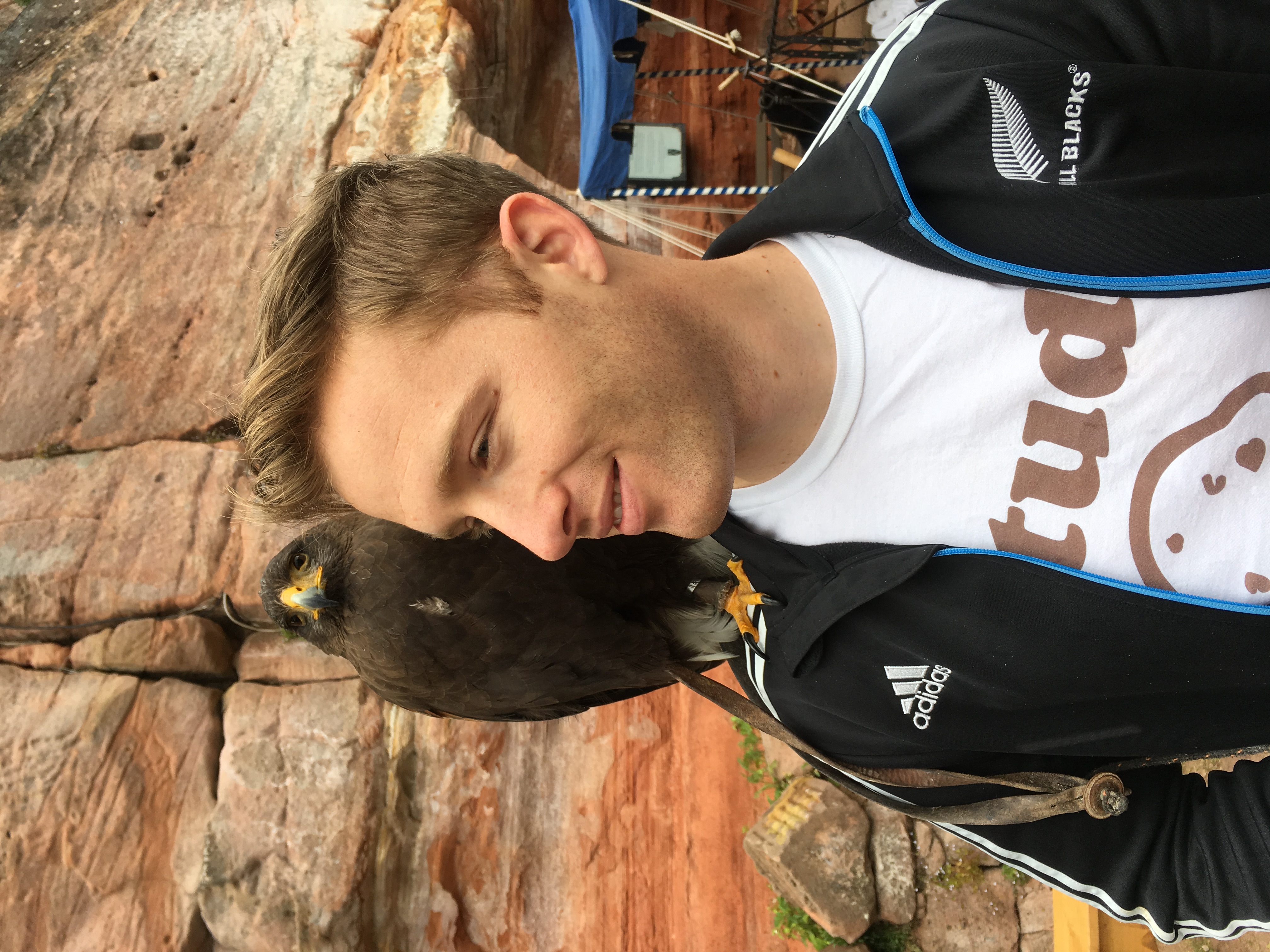
While my son goes through book phases like a prepubescent boy goes through favorite construction vehicles, Llama Llama Red Pajama has always been a hit.  He loves the voices I use, the catchy rhymes, the chaos a small child can bring to a parent’s night, all of it.  So logically, seeing real llamas was a guaranteed hit.  This was my bonding moment, and I planned on making the most of it.

My wife, sensing an opportunity to have a toddler-free afternoon, happily agreed to the outing.  My son, however, had other ideas.

The Perfect Plan

“I have a surprise for you,” I said, kneeling down so I could look my firstborn in the eye.  “Do you want to go see some llamas with me?”

He looked back at me with narrowed eyes as his toddler brain went to war over the competing desires of furry mammals and doting mothers.  “I want mommy to take me,” he said, neatly splitting the Gordian knot.

After some placating actions made to a thoroughly unconvinced toddler, we loaded up and took off.  My plan was in action and nothing would stop me from finally having a bonding moment with my son.  I could already picture his face lighting up when he saw the llamas, hear him telling his mom about how amazing his day was with that enthusiasim reserved for truly special experiences.  This was it—my time to shine as Dad of the Year and secure a beachhead in the Normandy of his heart.

As we drove, a gleaming white building caught my eye.  At first, I thought it was a Church of Jesus Christ of Latter-day Saint’s temple.  We were in Utah, after all.  Further inspection showed its architecture to be all wrong, though.  I thought little of it until Google Maps helpfully told me to take the exit closest to the odd building.  Maybe we’ll see what it is as we drive by, I thought to myself. 

A few minutes later, I rolled to a stop looking directly at the white building as Google Maps happily pinged that we had arrived at our destination.  This confused me, because instead of a field of frolicking llamas, I was instead staring at Buddhist temple.  As for animal life, the selection appeared to be a plethora of peacocks.  Not a llama in sight.

Temple Trouble

A quick address check off the website showed that we were at the right location, with the text “open to the public” clearly displayed both online and in-person.  I looked through the windshield and saw a definite lack of public.  Or workers.  Or any living being apart from the peacocks.

“Daddy,” my son said from the backseat.  “Are we going to see the llamas?”

We had come for llamas, and I was going to deliver llamas.  Nothing—not peacocks, not abandoned temples, not my growing suspicions that we were trespassing—would stop me from giving my son this moment.

I turned the car off, collected the toddler, and strode through the temple grounds like a member of the public it was theoretically open to.  In the distance, a peacock shrieked.

Our effort was soon rewarded, as coming over a small rise revealed the promised pasture with its llama inhabitants.  Two dozen of the long-necked camelids grazed in the field below, a particularly majestic specimen with black and white markings standing at the peak of a small hill like a sentinel.  We had found our promised land, and beheld that it was good.  This was premium dad territory, and I could taste my victory.

As we came closer, however, the oddness of the situation sank in.  While I saw llamas, I still had yet to see another person.  We made it up to the fence without a soul in sight, and only a small sign hanging off the livestock gate gave me any context: “please close gate behind you”.  Next to this gate, however, was a human-sized switchback entrance like the line for the world’s worst amusement park ride.  Nothing blocked this path, so I threw my son on my shoulders, buried my increasingly certain trespassing guilt deep, and walked into the enclosure to the sound of screaming peacocks.

My son’s happy babbling and frantic waving at the llamas rapidly dispelled any concerns.  This is what I had dreamed of, a moment of pure joy radiating from his childlike heart as his father—his dad—brought him the closest he’ll ever get to seeing a unicorn. 

First Contact

As we walked into the field, the llamas turned to face us.  To my extreme pleasure, the black and white llama I had spotted earlier started walking towards us.  Not only did he get to see the llamas, but he’d likely have the opportunity to pet one as well!  I pulled out my phone to document the wonder of the moment so my wife would know what an amazing a husband and father she had found, which is why I now have photographic evidence of my son’s joy turning to terror in mere seconds.

In the first of three pictures, the llama is ten feet away and my son is leaning towards it, entranced.  In the second, the llama is five feet away and my son has visibly leaned back towards me.  In the third, the llama is a foot away and my son is attempting to crawl over my shoulder like a shipwreck victim who can’t swim clawing his way to air over the bodies of his shipmates.

At this moment, I admit, I still thought I could salvage the situation.  A few deep breaths, a demonstration of petting the llama, and we’d be back on track.  Then I saw the second llama approaching.  The third.  All hunting for food we didn’t have.  When I noticed the rest of the herd approaching, I knew the battle was lost. 

This wasn’t the bonding moment I’d envisioned.  No gentle petting, no core memory of delight, no photographic proof of my son’s face lighting up at his literary heroes comes to life.  Just terror, retreat, and the distinct possibility to explaining to my wife how I’d traumatized our child with the very animals meant to enchant him.

Unsatisfied with its victory, the black and white llama—the Sentry, I’d come to call him—chose to hound my steps the entire way out of the pasture.  It paced behind me, its teeth inches away from my now exposed neck.  I knew that science says llamas are herbivores, but can we really know what they do in the high mountain valleys of the Andes?  The thoughts of triumphantly returning to my wife fell apart, replaced with a new vision of her confused expression as two somber police officers tried explaining that her husband was the first documented victim of a fatal llama attack in the state of Utah.  Yet through her confused expression I saw a glimmer of acceptance, as though she thought, “Of course it would be him.”

More pressing than death: the image of returning to my wife a failure, her unsurprised expression when our son inevitably chose her for the next adventure. Thankfully, we made it back through the switchback entrance without incident.  The Sentry paced along the fence line, stymied but not yet defeated. 

No Prob-llama

Distracted by the relief of avoiding certain death, it took me a moment to realize that where fate had snatched away one victory, she had offered another.  Behind the gate, past some large bushes, sat a small playground complete with salvation in two forms: a swing set and a slide.

This was it—my pivot.  I’d survived llamageddon, now came redemption.  A playground with a llama view?  That’s the kind of creative problem-solving that wins favorite parent campaigns.  I hadn’t lost yet.

My son pulled another one-eighty, going from terror back to joy when I asked if he wanted to slide.  I convinced myself I had pulled victory from the jaws of defeat.  There are few feelings as pure as catching your smiling child at the bottom of a slide, and when they run up to do it again and again, you touch a dash of the joy you felt at that age through their smile. 

This was what he’d tell his mom about.  Not the terrifying llamas, but the slide.  The playground dad found.  The laughs we shared.  For five glorious minutes, I felt the crown settling onto my head.  I’d done it.

Then, as I stood at the bottom of the slide waiting to catch my son again, I happened to glance over my shoulder.  The Sentry had decided it wasn’t done with me.  Weaving through the switchback gate like a shaggy snake, it stood on the human side of the fence and stared at me.  Like high noon in a John Wayne movie, the two of us locked eyes.  I wasn’t sure how effective my decade-old boxing skills would be on a llama, but I was prepared to find out.

Before I could start any llama drama, however, the Sentry turned its nose up and ambled towards the temple, dismissing me entirely.  Beneath consideration.  I was already beaten. 

Fate, having given me enough of her charity, chose at that moment to withdraw her favor.  A peacock hiding in the bushes a few feet away let loose the most tremendous screech we had heard up to that point.  My son’s eyes went huge and he sprinted into my arms.  I gathered him up and comforted him as best I could, but the damage was done.

“I wanna go home,” he said.

And just like that, my salvage operation collapsed.  The llamas had broken him first, and now the peacocks finished the job.  I’d brought my son to a Buddhist temple to be terrorized by livestock.  Father of the year, indeed.

What was I to do?  Bowing my head in defeat, I hugged my son tight and carried him back towards our car.

As I carried him to the parking lot, I spotted the Sentry once again.  It stood casually chewing on a tree outside the temple entrance, exactly where any visitor would walk through.  No longer pursuing, no longer threatening.  Just…occupying the space.  Claiming it.  The creature had won its war and driven us from the field.  Now it stood sentry over territory I was actively fleeing.

In the distance, another peacock shrieked.  I picked up the pace.

From the Ashes, Victory

As we drove away from the temple, I glanced in the rearview mirror to check on my son.  I saw the Sentry still standing guard, surveying its domain.  I fought the llama, and the llama won.

Then my son’s voice cut through my defeat.  “Daddy, horse!” he pointed excitedly at a field we passed.  Then another.  “More horsies!  Two horsies!  Daddy, do you see it?”

I smiled and caught his eye in the rearview mirror.  “I see it, little hawk.”

“And we went on the slide!” he continued, his enthusiasm building.  “The big slide!  And the peacocks were SO LOUD!”  He made an exaggerated screech that bore zero resemblance to an actual peacock but conveyed the essence of it perfectly.  Then he laughed.

I watched him in that mirror, this tiny person who had moved from terror to joy to terror to joy again in the span of an hour, and was now excitedly cataloging every moment—except the llamas.

We made it back to my in-law’s house, and my wife asked us how it went.  Before I could get a word in, my son launched into a detailed account of how much fun he had on the slide, interspersed with dramatic recounting of how loud the peacocks were.  When she asked if he saw the llamas, he briefly acknowledged their existence before jumping right back to the slide and peacocks.

I smiled as I watched him, realizing the black and white llama might have won its war, but I’d somehow won mine.  Not through a meticulously planned llama encounter, but through catching him at the bottom of a slide.  Through spotting horses with him on the drive home.  Through being there when peacocks terrified him and slides delighted him in equal measure.

My wife looked at me, reading something in my expression.  “Sounds like an adventure,” she said.

“It was,” I replied. And meant it.

Turns out favorite parent isn’t a crown you win.  It’s being there when peacocks shriek, when slides save you, when terror turns to laughter in the space of a breath.  You can’t manufacture the perfect moment.  You can only be present for the real one.

So even though I know it will sting tomorrow when he makes his preference for his mom blatantly clear, I’ll know that he and I still have our moments—those in the past, and those still to come.

But I’m absolutely not mentioning my recurring llama-themed nightmares.  Some defeats are better left unshared.

Introducing “Interim Management”

Hello! I’m back from an extended hiatus with something new–the first chapter to my current work-in-progress. This is a draft chapter from my novel Interim Management, a mash-up of Weekend at Bernie’s, Office Space, and good old fashioned dark lord fantasy. I’ll periodically post bits of this as I go, so let me know what you think. Without further ado, please enjoy this snippet from Interim Management!

Writing

Chapter 1

Meridian Ledgerborn hurried back into his office, arms full of scrolls.  He stumbled at the last stretch and the scrolls flew everywhere as the sharp edge of his desk caught him in the stomach.  The ochre elf curled over himself, trying to catch his breath.

“He expected you five minutes ago,” a voice hissed from the upper corner of the room.

Meridian scowled up at the speaker.  “I am well aware, Cordelia,” he huffed.  “Perhaps you could make yourself useful as my assistant and assist in picking up these scrolls?”

Cordelia shrugged and lowered her hulking form down from the ceiling with six of her eight legs.  Her talons clicked in a discomforting way as they found small crevices to latch onto, and the host of eyes on her massive head spasmed in every direction at once, save for the largest in the middle that fixed on Meridian even as the arachnoid’s body rotated completely around.

Most sentient races ran in terror when an arachnoid approached, but Meridian had more experience with them than most.  Plus, good work was hard to come by in the Midnight Tower, and Cordelia’s filing skills would impress even a High Elf magistrate.

“Careful with that!” he said, jerking a scroll away from a trail of amber liquid dripping from one of the arachnoid’s fangs.  He knocked over a plate of scones as he did—Bertram must have dropped by earlier.

“My apologies,” Cordelia said in the hissing tone of her people.  She dropped her crochet supplies into a tray tied to her thorax and used her forelegs to adjust the acid cups hanging under her fangs.

“The last thing I need right now is a massive hole in the middle of my presentation,” Meridian said.  “Grab that one over there, next to the goblin work order bin.”

One of Cordelia’s legs hooked out and snagged the scroll, bringing it over to the growing pile on Meridian’s desk.  “You do know that bad news rarely improves with time,” she said.

“There is no such thing as bad news,” Meridian said, putting the scrolls back in proper order.  “Just poorly explained opportunities.”

“Your previous four predecessors died thinking similar things,” Cordelia noted.  She cracked open a scroll and scanned it with a jittering eye.  “Well, three of them.  The other tried to flee rather than deliver bad news.  I don’t think he thought much of anything after what the Dark Lord did to him.”

Meridian’s hands started to shake, jostling the precarious scroll pile.  He glared at the arachnoid.  “Unlike those charlatans, I am a trained elven administrator with the finest certifications offered by the Conclave of Oversight.  There is no bureaucratic impediment I cannot overcome.”

Several of Cordelia’s eyes rotated to stare at Meridian.  “I don’t think he’ll use bureaucracy to kill you.”

Meridian let out an exasperated sigh.  “Fine, what would you recommend then?”

“Bribery.”  Cordelia gestured to a box to the side of Meridian’s desk overflowing with gold, weapons, and enchanted trinkets.  “Take something from the tribute pile and hope it distracts him enough from what you have to tell him that you make it out in one piece.”

Meridian scoffed.  “As if I need tricks like that.  You have so little faith in me.”

“I have plenty of faith in you,” she said.  “I just have more in the Dark Lord’s aim.”

Meridian made shooing motions with his hands.  “Your input is noted.  Go work on the latest requisition forms from Warchief Deathmaul for her battle preparations.  I’ll want to verify them after I’ve met with the Dark Lord.”

Cordelia’s sighed, a sound most found similar to that of a soul getting ripped from a body by a feral banshee.  “As you wish,” she said, her tone making it clear she had no expectation of any verification from Meridian.

The elf closed his eyes, assumed a power stance, and recited his mantra to himself.  I am prepared, he thought.  I am precise.  I know the protocols.  He opened his eyes and gathered his scrolls, then paused.  He glanced over at the tribute pile, then down at the pile of scrolls in his arms.

“Voided contract,” he swore under his breath, dropping the scrolls.  Meridian walked over to the pile of treasure and rummaged through the bin.  His eyes caught on an iridescent amulet, and he tossed it into a robe pocket not filled with spare quill tips.

Meridian collected his scrolls, arched back his shoulders, and took a deep breath.  Then he walked past the braziers of demonsoul fire into the Dark Lord’s throne room.

The Dark Lord Maleficus, Dreadlord of the Wastes, Slayer of Hope, and Shepherd of the End Times slouched in his throne at the far end of the massive room.  Trophies from his conquest littered the space around him, and a haphazard pile of skulls still sat off to one side where an orc work party had left them after the Dark Lord had killed them for a lack of progress on their sculptures. 

The elf cleared his throat and announced himself. “Great One, may I approach?”

The man had on his draconic armor without the helmet, letting his burning eyes bore into Meridian.  Clawed gauntlets gauged grooves in the onyx throne, the sound making the elf fight not to wince.

“Come,” the Dark Lord said after an interminable wait. 

Meridian tried to maintain a stately pace, but he quickened his step after the first twenty strides.  Silence poured in from every direction, and shadows crawled from around pillars to reach for him.  He had to swat one away that got too close with a scroll, nearly upsetting the entire pile again.

Meridian came to a halt at the customary distance from the throne after the long walk, heart pounding.  Up close, the Dark Lord radiated menace.  This man had ruled a moderate sized corner of Valdris up until a few years prior when he launched the Consolidation Wars, a ruthless struggle to bring any race and power not aligned to the Light under his rule.  He forged the orcs, goblins, humans, and ochre elves under him into a sword, one aimed squarely at the Light’s High Council in Auralis—just as the Sundering Prophecy foretold.

“Great One,” Merdian started, but his voice broke on the second word.  He coughed again to try and clear his throat, but his dry mouth fought against him.  He hadn’t been this nervous since his disastrous presentation to the Conclave of Oversight.  “I come with news and an opportunity.”

The Dark Lord stared at Meridian as he continued to gauge a series of lines in his throne’s armrest, a flare of crimson in his eyes the only indication he had heard.

Meridian plunged forward.  “We’ve had a report from the treasury.  It appears that our previous estimates of liquid funds erred on the higher side.”  With a practiced flick of his wrist, Meridian opened a scroll with a series of lines on it labeled in his neat script.  “While at first glance current projections paint a somewhat dim picture, I am confident that my rectification plan will set things aright with minimal loss of productivity.”

The Dark Lord’s fingers went still.  Meri fought not to choke on his own saliva as it suddenly poured into his dry mouth.

“Where,” the Dark Lord said, his voice like steel drawn from a sheath, “is my gold?”

Meridian let the first scroll drop and unrolled a second one.  “The more important question is how much more gold will you have after we implement some of my recommended changes.  I think you’ll be quite pleased with the answer.” 

A crack echoed through the throne room as the Dark Lord’s gauntlet crushed the onyx arm rest into powdered gravel.  “Where,” he repeated, “is my gold?”

“Ah,” Meridian said, rifling through his scrolls to find one he had hoped not to use.  “Are you familiar with the term ‘embezzlement,’ Great One?”

The Dark Lord shot to his feet, his hulking form pushing the solid stone throne off its dais to crash against the floor behind.  “Someone dares steal from me?” he roared, magic giving his voice a painful resonance.  Flames arched from his eyes and the shadows along the edge of the throne room whipped into a frenzy.

Meridian took a step backward, eyes wide as he scrambled to find a scroll to fix the situation.  He mentally shot through his list of options he had made prior to entering the throne room, only to realize he hadn’t considered vengeful demigod as one of the potential outcomes.

“I will flay their skin from their bones!” the Dark Lord screamed.  His body levitated from the ground, a maelstrom of darkness swirling around his armor.  “I will rend their flesh!  They will know endless agony on my racks of eternal torment!”

Meridian had dropped his scrolls and frantically searched through them on the ground as the smell of sulfur assaulted his nostrils.  With a gasp of relief, he picked up the one he knew would get his presentation back on track.  “Great One,” he said, coming to his feet and proudly displaying the chart he had painstakingly drawn over four hours the previous night.  “Have you heard of the magic of compound interest?”

The Dark Lord let out a wordless shout of rage, and darkness exploded from him in a shrieking wave.  The force of it blew Meridian off his feet, but tendrils of shadows caught him and jerked him back toward the Dark Lord before he hit the ground.  They slithered around his body, whispering madness in his ears as he floated closer to his now incandescent boss.

“Your head will be the first to adorn my walls on my pursuit of vengeance,” the Dark Lord intoned, pointing a clawed finger at Meridian.  Sickly green energy glowed around the gauntlet, dark magical essence dripping from the draconic steel.

Execution method 3C, Meridian couldn’t help but think as he saw it.  Bone magic, poisoning.  He could at least be grateful it wasn’t a Category 4 spell.

“Die!” the Dark Lord howled, and a lance of dark magic shot toward Meridian. 

A moment before it struck, Meridian felt a burning warmth from one of his pockets.  Rippling light sprung forth around him, coalescing in front of Meridian’s chest.  The dark magic hit the radiant light, then rebounded right back at the Dark Lord.

Meridian had an excellent view of the surprise on the Dark Lord’s face as his own spell hit the man between his eyebrows, launching him backwards off his throne pedestal.  The shadows holding Meridian dissipated, dumping him on his back and knocking the wind out of him.  He curled up into a ball and fought to breathe, waiting for the final blow to strike.  Certainly category 4 this time, he thought between gasps.

After ten seconds of cowering, Meridian felt a growing terror.  The delay could only mean the Dark Lord had something truly horrific in mind that needed time to cast.  After a minute, he let out a quiet sob.  Even his predecessor who tried to run only got fifty seconds of silent dread before the Dark Lord started siphoning off his soul.

Five minutes later, Meridian found himself growing indignant.  There were fear tactics, then there was being rude.  Time was not so much a luxury to be squandered in such a way.  Meridian was prepared to die, but wasting his time?  That was offensive.

He risked a quick look around, and his indignation shifted to confusion.  It took him a moment to understand why—the shadows had vanished.

Meridian lifted his head higher and scanned the throne room.  No flicker of motion caught his eye, no cursed whispering drifted into his ear.  The throne room seemed to be just a room.

“Great One?” he said.  Only silence came back in return.

His dread at the earlier silence felt like nothing compared to what he felt now.  He could only think of one reason why the Dark Lord had yet to kill him, and it was unthinkable.

Meridian got to his feet and crouched low, not wanting to see what laid behind the throne dais but knowing he had to anyways.  He inched forward and arched his neck, peeking over the edge.

Two armored legs hung over the toppled throne.  Meridian noted how incredibly still the Dark Lord managed to hold them, not a twitch or any swaying whatsoever.

“Sire,” Meridian tried again.  The legs remained quite immobile.

Meridian’s lips pressed into a thin line, and he moved to the side so the throne wouldn’t block his view.  The rest of the Dark Lord’s armored form laid sprawled out across the onyx throne, his head tilted away.

Hesitant like a mouse nosing toward a suspiciously convenient piece of cheese, Meridian approached the Dark Lord.  He found himself standing next to the armor with no clear idea of what to do next.  Shouting seemed both ineffective and inappropriate given the distance, but touching the Dark Lord? 

Meridian took a series of breaths and closed his eyes, then darted a hand forward to nudge one of the gauntlets.  He braced himself for the inevitable rage, then cracked an eye open when it failed to materialize.  The Dark Lord remained distressingly stationary.

Seeing no other options, Meridian shuffled his feet and worked around the Dark Lord to look at his face.  There, between two eyes still open with shock, he saw a neat hole burned through the forehead with a trail of gray fluid oozing toward the floor.  As he watched, a glob of it broke free and fell to the floor with a gentle plopping noise.

The Dark Lord Maleficus, Dreadlord of the Wastes, Slayer of Hope, and Shepherd of the End Times was dead.

Meridian Ledgerborn, administrative aide to the Dark Lord and semi-banished ochre elf of no renown, had accidentally killed him.

Seven Layers Deep: Understanding Your Life Through Bean Dip

Strategery

You’re trapped at a mind-numbing party, and it’s as exciting as listening to your spouse retell the same story for the 389th time. The guests bore you more than reading your friend’s fanfic, the 2010s-era playlist grates like zesting a lemon onto an open wound, and there are odd noises coming from behind the bathroom door that’s been locked since you arrived. 

Then, you see it. Across the room, next to a strategically placed bag of chips, salvation. Seven. Layer. Bean. Dip. Hope is kindled. 

You make your way over, ready to immerse yourself in its depths of flavor and mouth feel. But then you notice something. Why are there scrapings off the top? It’s as though someone took a chip and only got onions on it, maybe a drop of salsa juice. 

You watch in horror as one of the stock fish posing as guests does just that. A chip dabs at the surface of the dip like an astronaut bouncing off the atmosphere on reentry. The offender walks away, ignorant of the missed flavors waiting just below the surface. 

That flavorless philistine is you, dear reader, and the party is your life. You have been scraping the surface of true depth, but I am here to show you the way. To truly live, you must plunge deep into the layers of life’s bean dip, coming out the other side a more complete person. 

What separates a tasteless life from one swimming in flavor is the dip of the mind—thinking. Far too often, we splash in the shallow puddles of instinct—the chopped onions and sliced olives, as it were. We leave behind the meat and beans only earned through the hard, pure sweat of the mind. Surface scrapers get surface lives.

Going just one or two layers deep with our thoughts is a recipe for disaster. Instead, one should approach important topics just like one would a delicious bean dip—seven layers deep. 

I wrote recently on the critical thinking crisis, but this Wandering will go—dare I say it—a little deeper. Up front, this is not therapy or academic naval gazing. This is a simple technique you use to understand your own thoughts, or complete lack thereof. It takes you from a reactive life to an intentional one. A few minutes of thought, some existential angst; now you’re off to the races. 

Come, friend. Plunge into the depths with me and taste the flavors of life you have yet to realize you’ve missed. 

Putting the Critical in Thinking

There’s an old joke about how 50% of Americans are dumber than the most average person you know (that’s right, statistics jokes!). We can leverage that point further. How many deep thinkers do you know? I’m going to guess not many. 

So if we did that same 50% judgement, where do you think the average American lies on the shallow to deep thinker scale? Something tells me it’s not a nice, even bell curve. One step further: if the majority of folks are on the shallow side, statistically, where do you think you are?

This isn’t entirely your fault. We live in unprecedented times, where you are expected to always be connected, always be moving, always be hustling. We dance on the strings of algorithms run on supercomputers, and our 1.0 version brains still identify the sugar in Twinkies as a survival boon. Is it any wonder most of us live in a shallowness of thinkers?

That said, we make a lot of decisions that have major impacts. It’s worth knowing that the information and beliefs feeding those decisions are well-informed and not slopped from some algorithmic feeding trough. 

Questions like what career to undertake, qualities that matter in a partner, political beliefs, life goals—these deserve your time. But if your response as to why you believe what you do on any weighty topic is “That’s what I’ve always thought,” then you’re doing yourself a disservice.

Don’t just take my word for it. The psychology field is littered with papers talking about how people with deeper self-reflection make better decisions or how shallow thinking leads to superficial life outcomes. Harvard Business Review even wrote a whole piece on how reflection is what separates great professionals from the mediocre masses

If we don’t ask ourselves why we think the things we think, we sacrifice our agency to external forces. Maybe it’s your parents, or your instagram feed, or that one coworker that never shuts up about turmeric. Whatever the source, if it’s not you, that comes at a cost. And my friend, that cost is rarely one we enjoy paying. 

The Seven Layer Technique

Here’s what we’re going to do. I will go spelunking with you through all seven layers of the bean dip. We’ll blow past the surface levels most people pretend to be satisfied with. Then we’ll move into the layers where you start uncovering inherited beliefs versus personal convictions. After that, there’s the zone where you discover uncomfortable truths and core values. And finally, we reach the bottom of the bean dip—your authentic foundation. 

Are you ready? You look ready. Here’s the technique, in all its complexity and glory:

Ask yourself “why” seven times

That’s it. This is dipthinking at its finest. Just like losing weight, there’s no need for fancy fads or photoshopped Instagram models—calories out must exceed calories in, period dot. As Bruce Lee said, “the height of cultivation always runs to simplicity.” You’ll walk away from this with a practice tool to use on any important belief or decision, and the confidence that comes with knowing your thoughts are your own. 

One warning, before we begin. Just like how a proper bean dip will lay waste to an unprepared digestive system, this process may cause some discomfort. You will likely discover that some beliefs you’ve held close you don’t actually own, and that can lead to some hard questions. But those are questions worth asking to discover who you are, so lean into the struggle. 

Now grab your chips and let’s dig in. 

How to Dipthink

As we begin this journey into the dip of life’s greatest questions, we must remember to start at the beginning: the question. This is your chip, the conveyance upon which the flavor of the dip is transported to your taste buds. 

The most important aspect of your chip is that it has heft. You’re about to load up seven different layers of meaning on it—that requires significant tensile strength. A weak chip will snap under the pressure, just like a weak question will fail to pull as much from the process as a strong question would. 

Running the question why you wanted a grilled cheese sandwich for lunch is like expecting a translucent potato chip to hold anything beyond a thin layer of oil without snapping like a twig. Asking why you can’t stop eating those potato chips even though they go against what you think are your weight loss goals, however… now we’ve got a solid tortilla chip ready for serious spelunking. 

Let’s pick a chip we all might relate to as an example: why do I want this job? Onto the first stop on our journey, the surface scrape. 

Layers 1 and 2: The Surface Scrape

As our question chip submersible begins its voyage, we start at the first layer: the onions of instinct. Like when you cut into an onion, this is what slaps you in the face and turns you away. It’s instinctive, with little thought behind it if there’s any at all.

In our example, let’s say the instinctive answer as to why you want this job is because it pays well. Simple, clean, and shallow. It fakes doing the job of real thought well enough that many people would stop there. Woe unto such misled souls. Deeper we go. 

We pass the onions and find ourselves in the olives of false security. For most, this second layer is what passes for deep thinking. They have taken things one step farther, and thinking they now have the giant shoulders others might stand on, pat themselves on the back and call it good. Again, woe. 

Continuing our example, this second layer of why might return the answer “because I need financial security.” Answers like this give false security by appearing deep without having any actual depth. Yes, financial security is important, but literally everyone needs that. It’s why we need that individually where things get interesting.

These first two layers consist of the shallowest thinking. They’re hard to dig through because a) thinking is hard, and b) shallow thinking reinforces itself in the mind (if you have an hour, this video does a great job explaining it). It costs less energy for us to react instinctively, so the brain prefers to save those calories for running from lions and avoiding awkward social encounters. 

But you are ready to feel the burn. Buckle up as we dive deeper into our dip, to the layers of inheritance. 

Layers 3 and 4: The Inherited Zone

The third layer is the first with some heft to it: the cheese of inheritance. Much like how certain dairy products can produce blockages, this layer can be hard to push through. It’s the first indication that your thoughts aren’t yours as much as you once thought. 

As you question your own desire for financial security, “I need financial security” morphs into “Because I feel like I need a certain level of wealth to be happy.” Suddenly, we’re in territory that challenges you. 

But enlightenment waits for no one, so deeper we go. We pass the cheese and move into the salsa of recognition. Like cartographers scrawled on the corners of maps when they got poetic, here be monsters. This layer often opens us up to reflections like a fun house mirror, only when we do a double take, we realize we actually look like that. 

Your fourth iteration of asking why on a potential career choice now takes a turn. Suddenly, you realize that your linkage of happiness to a certain level of wealth stems from how much your parents stressed about finances in your childhood and your desire to avoid that. This could spur a whole separate string of questions, but we’ll leave that aside for now. 

The inherited zone questions help us reach the first real drivers in our lives. We dove under the surface and started identifying root causes—in this case, a desire to not end up like our parents financially. This is akin to Toyota’s lesser Five Why’s technique, one designed to help identify root causes in corporate processes.

But we aren’t building cars here, we’re building lives. Why stop now when the juiciest layers still lie before us? If you thought the inherited zone was uncomfortable, just wait for this one. Onward, intrepid explorer of the internal psyche!

Layers 5 and 6: The Discomfort Zone

Ahh, layer five: the sour cream of conflicting values. That slightly acidic taste that somehow compliments all the others. This layer takes the revelations of the external forces from the last two and plunges into our internal values. 

Now you realize that it’s not a simple ‘wealth equals happiness’ equation. No, the understanding about your parents twists that previous answer on itself. It’s not happiness, it’s self-worth—something deeper. You now recognize that you have tied the number in your bank account to your worth as a human being. Ouch. 

Sometimes the only way out is through. As the sour cream fades behind us, we cross the border into the meat layer. Packed with protein, suffused with grease, this layer has real flavor for those brave enough to probe its depths. 

For you see, asking why a sixth time in our example makes you realize something. You don’t want to be that person that layer five showed you. It conflicts with who you think you are as a person, or at least who you’d like to be. You’re on the cusp of internal revelation that might lead to external revolution. 

The research on this is clear: deep reflection leads to more conscious decisions and authentic living. Self-worth and satisfaction come from aligning our actions to our values, which is a hard thing to do if you don’t understand what those values are. The discomfort zone shows us those, for good and for ill. 

There is but one layer ahead of us now. The penultimate layer, the bottom of this undredged lake just waiting to be explored. Cry havoc and let slip the refried beans of enlightenment!

Layer Seven: The Foundation

One cannot have seven-layer bean dip without beans. They are its cornerstone, the pillar upon which the dip’s entire flavor palace rests. It is the congealed, gummy glue that brings the whole package together, and you have reached it. Bravo. 

You reconsider the job offer. A seventh why interrogates the thought of why this job goes against your values. And then—enlightenment. You recognize that while it may give you wealth and security, it fails to accomplish something more important to you, helping others. You thank the job offerors for their time, politely decline, and resume the search with a clear North Star to follow. 

Putting the Layers Together

Hopefully this example shows the power of the technique. Like water pressure, it gains strength the deeper you go. Also like water pressure, if you’re not adequately prepared before plunging into the abyss, you’ll get crushed. That’s why you need both a proper question and the right mindset. 

There are a host of questions useful for this process, far more than I could ever list. The career example we went through is likely one of the more common ones, but there are plenty of others. 

You could assess what you want out of a romantic relationship, moving from “they’re hot” to “we share core values.” Alternatively, platonic relationships work as well—less “they’re hot” and more “they’re amusing” on that one. Of course, there’s always politics, moving from “my family votes this way” to “wait, that politician voted for what?” Your mileage may vary with that one. 

Point is, this technique benefits from having legitimate questions as its target. But hey, if you want to run your latest fan theory about bad television through it, you do you. 

As for mindset, you need to go into this beanstorming process with one word at the forefront: humility. Any layer below one or two requires you to recognize that you have something to learn, which is hard to do if you come into it thinking you know all the answers. 

You also need humility to recognize that it’s ok to change your mind about things. Despite what every teenager feels, you never truly have all the answers in life. It’s a constant game of back and forth, and if you aren’t light on your feet, you’re liable to get crushed under the steamroller of reality. 

Side Effects May Include Indigestion

Now, I know what you’re thinking. “Seven layers? Isn’t that overdoing it a touch?” That depends entirely on what’s more important to you—fast decisions, or better decisions. 

Toyota is one of the world’s largest car companies with what’s probably the best reputation for dependability. If you don’t believe me, look at what brand is slapped on the side of trucks insurgents used to drive around Afghanistan. Here’s a hint—it wasn’t a Ford or Chevy. 

Do you think Toyota uses their Five Why’s process for kicks and giggles? No, my friend. They use it because some steely eyed Japanese businessman with the iron will of a 17th century Shogun has determined it is the most efficient way to ensure their products reach the market in the best possible condition. To do otherwise would bring dishonor on the dojo, and the same holds true for your life. 

“That’s all well and good,” you counter, “but I trust my gut.” Friend, I haven’t trusted my gut since the first time I got food poisoning, and neither should you. Research consistently shows that going with your gut tends to result in confirmation bias, unconsciously going with the status quo, a lack of critical thinking, and overconfidence

Intuition has its place, but it’s generally with snap decisions.  Anything that isn’t along the lines of ‘how best to run from this tiger presently chasing me’ would benefit from additional thought. 

“Yeah, sure,” you say, growing increasingly irate. “But what if I find out everything I thought I believed aren’t really my thoughts?” That is exactly the point. If you haven’t put in the effort, you’ll never know. Can you live like that? Sure, most people do. But is that the best way to live? I don’t think so. 

This also isn’t me saying everything you believe right now is wrong. You can absolutely go through this process, realize you have multiple inherited beliefs, and decide you still believe in them. We can inherit good things, too! The idea is to make sure your beliefs—whatever their source—ultimately come from your decision to believe in them. That leads to authenticity, and authenticity leads to a better life

Dipthinking to a More Flavorful Life

Return once more to our imaginary party. You watch as person after person approaches the seven-layer bean dip, grab a chip, and scrape along the top without a care. You, however, know that flavor town lies beneath the surface. These others… they don’t know what they’re missing. 

Every decision you make in life is a step on a path. Major decisions serve as forks on that path. If you don’t analyze why you think the way you do, you’re letting external forces choose your path for you. You have one life to live—shouldn’t you make sure it’s yours?

This isn’t about perfection—it’s about intention. You can choose right now to live a more authentic life. Pick a question today you care deeply about and set aside a few minutes to dive into it. I promise you’ll find it easier than you think, and more impactful than you’d imagine. The deeper you dig, the higher you rise.

Don’t settle for a surface life as a surface scraper. There’s a world of flavor just under the surface of your mind, and all it takes is having an appetite for it. After all, the authentic life is only seven questions away. 

Turf War: Defeat and Resurrection in Suburban Lawn Combat

Writing

It’s late winter. I stare out my glass door to the backyard, looking at the grass as it starts to stir from its winter hibernation. Signs of life pop everywhere. Everywhere save one spot—the Patch. My nemesis, my personal Vietnam, the Patch is a quagmire of suburban defeat that grew into an obsession threatening to destroy me from within.

I stare at the Patch, sipping water like a commander surveying enemy territory. Last year’s campaign yielded only sadness, rage, and a burning desire for revenge. It wasn’t just dead grass, it was dead dreams with a mortgage.

Lawn care is not my forte—I am a suburbanite out of necessity, not choice. My dream yard maintains itself, yet here am I with a gauntlet thrown.

The stakes? My right to be an American man. This country was founded on the principles of life, liberty, and the pursuit of low-key flexing on your neighbors by having the better lawn. The Geneva Convention does not apply to lawn care. This would be total war.

I swore on my father’s Craftsman tools that I would fix this Patch or die trying, and if I died, my final wish would be that they use my corpse to fertilize that patch of dirt so that even in death, I might emerge triumphant.

The Enemy Revealed

Now it is spring, a time of new growth in foliage and war. I knew this moment was coming since turning off the sprinklers in October and watching the grass fade to brown.

We inherited an ‘A for Effort’ sprinkler system that I blame for the Patch’s emergence. Since I know even less about irrigation systems than I do about lawns, I bit the bullet and put money down on having the system upgraded from ‘Maginot Line’ to ‘actually functional.’ This was the point of no return—if I didn’t fix the Patch, I’d have been better served shredding up the cash using it as turf instead.

I surveyed the frozen battlefield like Washington at Valley Forge, but with worse results. I noted enemy positions: the weeds had established forward operating bases, dandelions ran special ops along the fence line. But these were merely proxy forces, easily handled—the Patch remained the enemy’s center of gravity.

Even the noncombatants recognized the threat. My wife briefly commented on the Patch, demonstrating her awareness of my failure as a suburban male.  More worryingly, my son was thrilled to have his very own dirt patch to play in.  I had not known the Patch dabbled in information operations, but it had already subverted one family member to its cause.

Much like the abyss, the Patch stared back into me as I stared into it. I would restore it to life, and by doing so restore my honor as an American suburban male. It was time to let slip the sod of war.

Operation Green Thunder

Operation Green Thunder commenced with a three-pronged assault consisting of air strikes, chemical warfare, and boots on the ground. For those not up to date on lawn care terminology, I poked holes in the dirt to aerate it, fed the lawn some fertilizer, and spread out new grass seed like cluster munitions. I looked about, saw that it was good, and rested from my labors to await the Eden soon to come.

Alas, it was not to be. I checked the patch dozens of times daily, like a POW counting days on his cell wall. While the rest of my lawn sprung into glorious green life, the Patch remained as barren as my knowledge of horticulture. It mocked my efforts, grassassinating my hapless seedlings. I’d sown hope and reaped humiliation.

This is when I realized something important. The Patch was not as dead as I once imagined. Not that any grass had taken root, of course. It had a malignant will of its own, one it set against me with malicious glee. It had not hesitated to embrace scorched earth tactics, and it had its eyes set on green pastures. For the first time in this war, I felt fear.

Day by day, I watched the Patch fester while the rest of my lawn grew around it. I couldn’t even pretend I made progress because the Patch was the closest section of lawn to the back door. It sat there like Lucifer’s doormat, taunting me. An old song echoed in my head with a twist: I fought the lawn, and the lawn won.

Things came to a head when I couldn’t put off mowing any longer. The Patch sat in smug defiance as my mower blades passed harmlessly over it, mower blades in fruitless search for blades of grass. The line between the Patch and grass was as clear as a DMZ, and contained just as much latent hostility.

I knew I needed a change. Something to shake things up, my own personal Operation Overlord or Inchon landing.

I needed a reinforcements. I needed tactical support. I needed someone who had fought this war before, a veteran, a survivor of the Great Dead Patch Campaign of 2007.

I needed my dad.

Calling in the Calvary

When calling for aid, it’s important that the calvary has the Right Stuff. My dad is a true suburban warrior. By virtue of growing up in the middle of nowhere and working with a constellation of family members involved in general contracting, he’s picked up a wide array of useful skills.

Unfortunately, most of these skills missed the generational hop to me. In his defense, he did try to teach me, but I was more interested in memorizing Lord of the Rings quotes or giving myself concussions in multiple contact sports.

Regardless, when I have a home maintenance problem the internet fails to resolve, he’s my guru. In this particular instance, however, it went beyond the normal interaction. That’s due to my dad’s own version of Stalingrad at our house in California.

Just as I had a Patch in my backyard, he had one in the front. I recall months of trial and error on his part trying to fix it, which I observed with casual indifference, unaware of the poetic symmetry life would inflict on me 20 years later.

Truly, I have never felt closer to my dad than the moment I called him to ask for his help with my lawn. In that moment, the Patch became our family crest—two generations united by horticultural failure.  It was beautiful.

Once I had him on the line and explained my situation, our discussion went something like this:

Him: “Have you tried laying down sod?”

Me: “You can just do that? On your own, with no landscaper or…tractors, or whatever?”

Him (internally): Maybe all those contact sports weren’t the best idea.

Him (externally): “Yes, they sell it at Home Depot.”

This was it, the intelligence I needed to turn this war around. Operation Sod Drop was a go, my invasion plan set. I would get the sod and carpet bomb the Patch into submission. There would be no survivors. Except, you know, the grass.

The Final Battle

After wandering around Home Depot far too long, I found the sod and returned home to deliver my coup de grace. I plopped the sod down, unrolled it like a magician for his final reveal, and squinted in consternation at what I saw.

If life moments had a soundtrack, this would have been a ‘whomp whomp’ played on a dented tuba. Instead of lush, green grass lovingly cared for by turf professionals, my sod consisted of a scraggly brown mess more appropriate for a witch’s receding hairline. My carpet bombing campaign now looked like the charge of the light brigade.

I debated going back to get a different patch of sod, but time was not on my side. We had a road trip planned (a multi-day trip with a toddler and an infant; do not recommend, 0/5 stars), and my wife conveyed her slight displeasure with my unpacked luggage via subtle—then not subtle—threats.

So, we loaded up the car, pulled out of the driveway, and left the lawn to its own defenses. As I looked into the rear-view mirror, I heard the Patch cackling. But what could I do? A general goes to war with the army he has, and sometimes you have to roll for the hard six.

What followed was two weeks of trial and tribulation. Not due to the screaming children in the backseat. Not due to the inherent madness that comes with visiting family. Not even due to having to skip our go-to ice cream spot because the line was too long.

No, my trial came from not knowing how my sod warrior fared against my nemesis. Every lawn we drove past reminded me of the battle happening on a distant front. Like a general before radio communication, I could only wait for dispatches from the front. Had my green troops held the line? Had the enemy counterattacked?

The nights grew long. My confidence faded, and only the guttering flicker of faith kept me going.

Triumph Through Tribulation

Then, at long last, my time came. Two days and an unfathomable amount of driving hours later, we made it home. Like McArthur splashing back onto the shores of the Philippines, I strode through the house to the backyard and said, “I have returned.”

At first, I couldn’t believe my eyes. The grass had grown to knee-height in our absence. I half expected to see one of those Japanese soldiers who refused to surrender decades after World War Two ended come tearing out of the foliage in a one-man bonsai charge.

Given the height of the lawn overall, the shortness of the sod made me think all my worst fears had come true. The power of the Patch could not be denied, and I would forever bear the stain on my honor as a suburban male.

But then I looked closer, surveying the battlefield with a commander’s eye.  Where brown desolation once ruled, green battalions now held every inch of contested ground. The Patch’s regime of terror had fallen. Victory was total, my revenge complete.

I turned to find my wife standing behind me, hair frazzled and nursing a thousand-yard stare. She had the look of a soldier who had fought through the enemy’s line, only to be told to do it again. I took her in my arms and swept a hand out towards the yard, wordlessly allowing her to share in my triumph.

She looked at me with eyes that had seen too much, and said, “Go unload the car before I stab you.”

Reflections on the Turf War

There are times when a plan requires constant adaptation. When a tactical genius proves their merit by snatching a smoldering ember of victory from the ashes of defeat. These are great stories, made all the better for their rarity.

Less potent yet just as satisfying is the feeling of when a plan comes together. I felt this as I looked at the Patch (after unloading the car). I’ve always appreciated the phrase vini vidi vici, but this moment brought home its true meaning to me.

As I look at the Patch today, sometimes I recall what I’ve read in books or heard from stories. How one might have a bittersweet respect for a worth adversary, a nostalgia for the fight.

I have none of that. What I do have is a feeling of righteous judgment as I laugh over the ruins of the Patch’s ambitions. I have fought the battle of the lawn warrior and emerged triumphant, and my verdant grass will see me to the Valhalla of Suburban American Men.

Some men are defined by their lawns; I was refined by mine.  I am become Lawn, bringer of life.

Mud, Blood, and Life Lessons: My First Mountain Biking Crash

Musing

“This is not ideal,” I thought as I catapulted over my bike’s handlebars into the creek below. Time crawled as I plummeted off the small bridge, the three-foot drop now looking like a stunt jump from a Tom Cruise movie. The words of the instructor who gave me my first and only mountain biking lesson came to mind: we all crash eventually. 

I splashed into the water, which wasn’t too bad. Refreshing, even. I also crashed into the rocks, which was less pleasant. The slow running water trickled over me as I sat up, grateful that at least no one else was around to have seen my fall from grace. Then I saw the blood streaming down the gash in my shin and thought perhaps riding solo had its downsides, like a lack of medical supplies. 

This was my first major crash while mountain biking. Intellectually, I knew it would happen, but there’s a difference between knowledge and experience. Hurling oneself down steep mountainsides at high speed may get the blood flowing, but it isn’t a risk-free endeavor. And as it turns out, crashing also gets the blood flowing. 

I crawled out of the creek and pulled my bike out with me.  My soggy clothes squelched as I plopped down on the trail and squinted at my shin. With the mud, blood, and semi-embedded gravel, it was hard to tell the severity of the wound. But in the moment, what bothered me more was the sudden feeling that maybe this wasn’t for me. 

I had flirted with the idea of mountain biking for over a decade, but never pulled the trigger. I like adrenaline-pumping activities. Heck, I’ve bungee jumped on three continents now, done solo skydiving, and continue to use the same cruise control joke with my wife after nine years of marriage. 

What I haven’t done, though, is really commit to something (apart from the bad jokes, but that’s a separate topic). Mountain biking fit nicely into a slot of perpetual aspiration. I could lean on the dream of it, but never risk the effort, cost, and threat of doing it. 

My wife, however, knows when to push the baby bird out of the nest. When we moved to Colorado, she insisted that I try mountain biking so that I would finally know which side to fall on. That or she was sick of me pining for it while staring forlornly out of windows. Either way, I signed up for a class and loved every second of it. The rush of tearing down a trail with trees whipping past hooked me deep, and I felt a passion just like I had imagined it feeling for years. 

Now, sitting on a deserted trail with blood coating my shin, that passion curdled like old milk. It was a physical representation of the joke, “Well well well, if it isn’t the consequences of my own actions.” The speed of my attitude shift would have been remarkable if it weren’t my own. 

As I wallowed, an old memory surfaced. When I was young, my dad taught me how to ride a horse. During one of my first rides, the horse got excited and took off at a gallop. I rolled over the back of the horse like a bobblehead getting flung off a car dashboard at a back-alley race. Hitting the ground knocked the wind out of me, and by the time I stopped panicking and could breathe again, the last thing I ever wanted was to get back on the devil horse. 

So what does my dad do? Picks me up and puts me right back on the hoofed demon. I calmly and clearly expressed my displeasure with the situation. He, in turn, listened to my argument, acknowledged receiving the words, and promptly ignored them. 

I ended up calming down and getting back in the saddle. The rest of the day went well, and I’ve been a passable horseman ever since with an appreciation both for the animal and the lesson of getting back on the horse. 

As I looked at my bike, I recognized it for what it was—another horse after another fall. Sure, there was risk. But there was also joy, and thrill, and cardiovascular benefit in a way that didn’t just suck. The only question was if I had the grit to dust myself off and get back on my chrome steed without someone else forcing me to do so. 

I got back on the bike. A drink of water, some quick test pedaling, and the trail rolled under me as I got back up to speed. As I did, some of the joy from earlier came back, but tinged with darker thoughts. 

Lost opportunities flashed through my mind: passing on diving coral reefs that look like underwater cathedrals, unconquered mountain peaks standing like stone monuments to missed moments, adventures relegated to Netflix documentaries like secondhand living. 

But what really hit hard as the wind rushed past and my legs pumped up and down was the erosion of time from procrastination. I could have biked that exact trail 15 years prior when I first moved to Colorado. I could have honed my skills over four years while living there, taking advantage of living in the Rockies. I could have taken my bike to all the places I’ve lived—Guam’s tropical trails, Germany’s mountain forests, Korea’s ancient paths, Hawaii’s volcanic slopes. 

I could have done so much. 

The question ‘why’ rattled through my head as my wheels turned.  Why did I choose a trail of excuses over hitting the physical trail?  Laziness?  That probably played a factor.  Lack of opportunity?  Even I can’t rationalize my way into believing that one.

Fear?  I rode down the last hill of the ride pondering that thought.  It wasn’t fear of the activity itself—I rode recklessly fast my first few times taking on steep downward hills, and still do.  Nor was it fear of financial cost.  I’m cheap, but renting a mountain bike through the facilities here is peanuts.  Doing it over a decade ago was likely the equivalent of pocket change.

It was fear of losing comfort, I decided.  Staying in my room watching movies or playing video games had a known quality.  Trying something new is a leap of faith—it may be fantastic, but it may take you to new lows.  For the majority of my life, I’ve deferred to certain mediocrity over uncertain magnificence—comfortable chairs and comfortable lies.  Now I wondered if comfort cost more than courage.

The ride finished in silence, me rolling back towards my starting point lost in thought. I trudged to the locker room and hopped in the shower, focused on cleaning off the mud and blood to get a true picture of the damage. 

The wound turned out to be surprisingly small. With the mud washed away and the blood cleaned up, I saw that the wound had already closed up.  No stitches needed, no awkward explanation to my wife later about a new limp. Like many of our perceived problems in life, perception outran reality.

I don’t claim to have had some mountain top epiphany. This crash didn’t change my life, nor have I stumbled upon a new life philosophy. Life is too messy for that, and the lesson of ‘get back on the horse’ is too simple for many of the issues we face.

What I can say, however, is that I’m still riding, crashes and all. I can say that my perspective on taking risks has expanded. I can say that I better grasp the cost of fear outweighing the cost of failure. 

And I can say that when I struggle my way to the top of a hill and look at the winding trail heading down the far side, the joy of the ride still comes to me.  Every single time, my heart races like it’s my first ride before I hit the pedals and launch myself forward

Have the courage to set comfort aside.  Your trails are waiting.

Sheeple Blinders: When ‘Just Asking Questions’ Threatens Weather Radars

Current Events

I like to follow the news—part civic duty, part masochistic tendency. Yet sometimes I come across an article so mind bogglingly bonkers, it makes me weep for our future. We had one of those recently. 

Here’s the headline: A militarized conspiracy theorist group believes radars are ‘weather weapons’ and is trying to destroy them. So yeah, that’s where we’re at these days. 

The group behind the threats is called Veterans on Patrol, which is both offensive and ironic: offensive because I’m a future veteran and don’t want my identity associated with this sort of nonsense, and ironic because the founder isn’t even a veteran. 

You may be surprised to hear that the original purpose of the group was not to patrol for nefarious government weather weapons. Actually, it was quite noble—raising awareness for the plight of veteran suicide, which is an actual issue. Somewhere along the way, though, things appear to have taken a hard turn. I’m not sure what linkage exists between veteran suicide awareness and weather weapons, but apparently they found it. 

From Noble Beginnings to Weather Weapons

This story resonated with me. My core professional interest is information operations (IO), especially understanding the how’s and why’s of influencing people. Having spent a few years of my life planning and analyzing information campaigns, seeing it live in the wild like this both intrigues and terrifies me. I find the mechanics of misinformation and disinformation (yes, there’s a difference) fascinating, and this event speaks to what happens when things go wrong. Or, depending on where you’re standing, very very right. 

The weather weapons posing such an existential threat to freedom loving, gun toting, cheeseburger slamming Americans everywhere are actually NEXRAD weather radars. They’ve been used since the 1990s for getting accurate data on severe storms, helping NOAA provide lifesaving early warnings to American citizens. They also augment FAA and Air Force radar capabilities that watch our nation’s skies. All in all, these are highly useful and ultimately quite boring capabilities that operate in the background to make your life safer. 

Enter the conspiracy theory. Like most of these ‘theories’, it’s heavy on insinuation and light on facts. Apparently, these aren’t weather radars at all—instead, they’re doomsday weather weapons bent on poisoning our skies because reasons. Exactly what they do or how they do it doesn’t matter, because that would require inconvenient stuff like evidence. 

The lack of evidence hasn’t stopped the militia group from becoming a threat. The group has publicly directed its members to find weaknesses in these sites, with their leader—again, not an actual veteran—claiming they will take down as many as possible. Because why not disrupt the system that tells us where hurricanes are heading right as we enter hurricane season?

The situation would be comical if it wasn’t so serious. Not only would attacking these sites potentially injure or kill the weather wizards who predict storm patterns, but even a slight disruption to that capability would mean hundreds or thousands of needless deaths from people who otherwise would have been warned their homes stood in the path of Zeus’s wrath. 

As tempting as it is to write off these folks as crackpots and mock them from our high towers, that doesn’t work. In fact, that tactic works about as well as convincing a toddler to eat veggies by lecturing them on nutritional science—it frustrates both parties and now there are condiments dripping from the ceiling. What we have here is a situation that calls for a meaningful response. It breaks down into three parts: understand, empathize, develop. 

The Psychology of Falling Down the Rabbit Hole

It’s depressing how often we condemn without making even a paltry effort to understand. I’m not saying we need to understand the conspiracy theories themselves—those are generally loonier than the fact the US military has lost at least six nuclear bombs to date. We need to do better understanding why people fall into these rabbit holes in the first place

First, we need to understand that most conspiracists start their journey with legitimate grievances. You rarely find the person with everything in life going their way trolling through Illuminati fan boy message boards at three in the morning. Instead, these beliefs—and the organizations that push them—prey on the vulnerable. 

It’s the man who lost his job to outsourcing overseas and thinks the system is rigged. It’s the mom who reads about how the government has done secret medical tests on US citizens and wonders what else they’re up to. It’s the boy on the cusp of adulthood who has no community institutions or social support structures to help him transition into the wider world and feels alone and abandoned. It’s people looking for a simple answer to a maelstrom of complex situations.

Once someone is primed like that, there are a host of psychological effects that suck people in like 90’s-era cartoon quicksand. Let’s just list a few of them:

  • Proportionality bias – belief that big events must have big causes
  • Pattern recognition short circuit – the brain finding patterns where none exist
  • Agency detection – tendency to attribute effects to intentional action instead of chance or systemic factors 
  • Dunning-Kruger effect – overestimating our own knowledge on a topic outside our expertise 
  • Confirmation bias – seeking and prioritizing information that confirms existing beliefs
  • Backfire effect – when correcting information reinforces incorrect beliefs 
  • Identity protection – when beliefs get tied to who you think you are as a person, ensuring you defend those beliefs even if they’re wrong 

These vulnerabilities are precisely what an information operations campaign target. In my professional experience, effective IO campaigns don’t create grievances from nothing—they identify fault lines and apply pressure. The most pervasive conspiracy theories naturally use amplification techniques I’ve studied, like narrative layering and credibility building through partial truths.

When you see it laid out, it’s a wonder we aren’t all conspiracists. Then again, the artist formally known as the History Channel makes its money off reruns of a show about how aliens built the pyramids, so maybe we aren’t as enlightened as we’d hope. 

The Hotel California Effect

Once someone gets roped into a conspiracy, there’s a better than decent chance they’re stuck. Like the proverbial Hotel California, you can check out anytime you like, but you’ll find yourself as an ostracized hermit if you leave. 

A conspiracy theory community is first and foremost a community. It’s a group of people with a shared belief that informs both their values and their identities. This is the sort of thing religious congregations and social clubs provided before the majority of people abandoned them. 

The thing is, though, we need those connections. So if the old guard of social organization falls apart, something will fill the gap. For some, that’s depression. For others, it’s getting together with other people that think Denver’s airport is a speakeasy for lizard people and mole men. 

This becomes a self-reinforcing condition. As one goes deeper into a conspiracy, it stresses relationships with non-believers. That encourages further integration with other believers, which causes even more stress with non-believers. Rinse and repeat until the only people left in a conspiracist’s life are others who share their belief. And that makes it almost impossible to leave, because where would you go?

Sheeple Blinders: How Conspiracists Close Their Minds

There’s another side to this, one that blends psychological quicksand with social bindings. Conspiracists love to point the finger at others and label them as government/corporation/local PTA stooges, but for folks that claim to have opened their eyes, they have remarkably closed minds. 

This narrowing of perspectives is called ‘audience isolation’—an IO technique where targets are gradually separated from contradictory information sources. It’s particularly effective because once established, the target maintains their isolation for you by actively avoiding outside perspectives.

I call this effect sheeple blinders. The word ‘sheeple’ is the best part of conspiracy theories, hands down. I love this word—it rolls off the tongue well and has a nice heat to it. Even the Russian judge gives it high marks. Why should we let the conspiracists own it? No, I’m taking it back and it starts here. 

Conspiracists put on progressively narrower sheeple blinders as they get further wrapped up in their beliefs. Concepts mentioned earlier like confirmation bias and identity protection create an environment where contradicting information is a threat to be avoided. 

The problem is that with conspiracy theories, almost all the information out there—along with all the facts—tend to be contradicting information to the conspiracy in question. So what’s the solution? As a friend of mine used to say, “admit nothing, deny everything, make counteraccusations.”

Any evidence contrary to their belief must be a threat. Anyone who disagrees with them must be a shill. Any sign of doubt must be purged. The sheeple blinders are broad, opaque, and relentless. 

Finding the Human Beneath the Conspiracy

Hopefully you now have a better understanding of what goes into making a conspiracist. That’s crucial for the next step: empathizing with them. 

Right up front, let me say there’s a difference between empathizing and accepting. Just because I’m willing to extend a hand of friendship and mercy to someone who got tricked into believing something doesn’t mean I’m good with them blowing up weather radars. Actions have consequences, and harmful consequences deserve an appropriate response. 

That said, there is a difference between dangerous actions and confused thinking. The latter tends to lead to the former, so it’s the latter we should focus on. We already covered why people might get sucked into a conspiracy, but let’s take it a step further. 

We are social creatures. Stick us in a room with no social contact for an extended period, and you’ll have us trying to emulate Jackson Pollock with our feces on the wall before long. It’s hardwired into our brains to seek companionship and acceptance from the tribe, because that’s what enables us to survive as a species. 

When you look at the average conspiracist, it’s hard not to just see a crackpot raving about how contrails are poison clouds the government uses to control us. What we need to see, however, is the human being underneath the confusion, anger, and helplessness. 

Beyond social needs, we all also crave meaning and control in our lives. Sadly, life isn’t too keen on offering much in the way of those externally. Meaning and control come from within, but that’s a different Wandering altogether. 

I guarantee that at some point in your life, you’ve felt like you’ve lost control. Like you weren’t sure what the meaning of it all was. Now imagine at that at your lowest point, someone came to you claiming to have all the answers, and offered you a community of fellow believers that knew what it all meant. Tempting proposition, no?

That’s what happens to conspiracists. It’s truly a “there but for the grace of God, go I” situation. Any of us could find ourselves there had the cards been dealt just a little different. So maybe we should try a little harder to see ourselves in those that weren’t so lucky. 

The Critical Thinking Crisis

Unlike what the vast majority of conspiracy theories claim, there are no easy solutions to complex problems. In the case of deprogramming conspiracists and preventing others from putting on sheeple blinders, that’s doubly true for one reason: we’re actively making the situation worse. 

I speak, of course, about the state of critical thinking in the United States. It’s as though we are actively opposed to both the critical part and the thinking part, which would be impressive if it wasn’t so depressing. 

For example, can you think of any class you took K-12 that the main objective was to learn critical thinking? Or was your education like mine, where “critical thinking” got sprinkled on as an afterthought in every syllabus, like a teenager making minimum wage at a froyo shop adding my cookie dough chunks.

We don’t prioritize critical thinking, and the evidence is all around us. Look at our media landscape. It’s the least trusted it’s ever been, largely because most outlets cater to specific audiences as opposed to the truth. At this point, I’d say The Onion might be the sole remaining city on a hill. 

How did it get that way? Because people stopped caring about the truth versus having their sweet, sweet confirmation bias fix. Sound familiar? That’s right, baby—we all have sheeple blinders on!

Critical thinking implies looking past the headline to find truth. It means acknowledging our biases and preferences, determine how to overcome them, and accepting reality as it is, not as we want it to be. 

How do we fix this? No clue. Obviously, some sort of educational campaign for youth is a good place to start, but it doesn’t do much for those of us who have already done our time in the public education system. Naming and shaming doesn’t work either (that pesky identity defense system and the Dunning-Kruger effect would like a word). Like I said earlier, complex issues don’t have simple answers. 

Maybe we start by recognizing we all have these tendencies. If there’s one facet to a solution that might trump all the others, it’s embracing humility. There are few forces more powerful for advancing the greater good than an ability to acknowledge when we’re wrong. If only it was easier to swallow. 

‘Just Asking Questions’ and Other Deflections

There are those that would defend conspiracy theories and those that hawk them with high-minded ideals. These fine folks are ‘just asking questions’ or are ‘free speech advocates.’ Balderdash, I say! 

Let’s start with the ‘just asking questions’ bit. Questions are great. They lead to things like finding that item at the store I wasted 30 minutes looking for because social interaction terrifies me, or clarifying with my loving wife that no, she would rather I not send our toddler to daycare painted like an extra from Braveheart. 

The difference between these questions and ‘just asking questions’ is that only one of them involves wanting to hear the answer. If the average conspiracist actually cared about the truth, they’d listen with an open mind to the overwhelming evidence that they’ve been misled. Instead, the sheeple blinders come on and only the answers they want to hear make it through. 

The ‘just asking questions’ technique has a technical name in information operations: implied falsehood insertion. It’s when you create a misleading impression through a technically true statement, omissions, or implications. In this instance, it moves the burden of defense on the listener, allowing the ‘questioner’ to throw up their hands behind a thin veneer of plausible deniability.

More often than not, anyone saying they’re ‘just asking questions’ is either ‘just wanting attention’ or ‘just deflecting your justifiable outrage that I’m claiming the government made up a school shooting.’

As for free speech, I’m also a fan. It’s why I can write ridiculous blog posts on the internet with virtually zero consequences. When conspiracists cower behind it, however, they’re twisting something noble to ugly ends. 

First, free speech does not mean freedom from consequences. All it means is the government can’t censor you. There’s nothing that says companies can’t kick you off their platform, people can’t call you an idiot, or house pets can’t look at you with shame in their eyes. Consequences are like gravity—if you don’t prepare for them, certain situations will end poorly for you. 

Second, conspiracists will cry about free speech when someone does something unimaginable like fact checking them. Again, this isn’t how free speech works. This is how dialogue operates in a functional society. If you can’t handle the heat, stay out of the kitchen of ideas. 

Finally, conspiracists use the claim of free speech like a reverse uno card. Instead of providing actual proof of their claims, they just yell “free speech” like a magician mumbling in Latin, acting like it somehow protects them. 

Oh, one final thought on conspiracists: if you know what you’re peddling is false and do it anyways for personal gain, you are a garbage human being. People like Alex Jones that push excrement like how the Sandy Hook mass shooting was fake then have the gall to claim in court that they’re just entertainers are evil, sadistic cowards. They are parasites with the aesthetic appeal and backbone of an Amazonian river leech, and that’s not a fair comparison to the leech. 

Building Bridges, not Barricades: Moving Forward Together

Weather radars that save lives are good. That there’s a group threatening to destroy them for outlandish reasons with zero evidence is bad. The people who believe such things are neither good nor bad, they’re just confused. 

This fight is in desperate need of more empathy. When we vilify those that have pulled sheeple blinders over their eyes, we make the problem worse. Nobody ever mocked their way into a positive relationship, and all yelling at each other does is drive up the stock price of whoever makes ibuprofen. 

If there’s someone in your life who has put on sheeple blinders, trying to rip them off won’t work. You have to convince them to take them off themselves. Resist the urge to ridicule. Ask genuine questions about how they came to believe this information. Create safe spaces for doubt by acknowledging your own ignorance. But most importantly, practice some humility—none of us are immune to mis- and disinformation.

Let’s work to think more clearly. Let’s work to make a shared understanding of reality. But most importantly, let’s work to treat each other like human beings. 

Board Game Theory: Winning at the Games of Life

Musing

Before we had children and lost all control over our lives, my wife and I enjoyed playing board games together. Our personal philosophies on those games, however, differs somewhat. While she plays to have a pleasant evening with friends and loved ones, I play in order to lay waste to the competition. There are moments when if Machiavelli happened to be playing Catan with us, he’d sit back and say, “Dude.”

Thinking about that side of me led to my own personal game theory. Every situation you find yourself in can be treated like a game—there are rules, objectives, and strategies. Knowing what those are gives you an advantage. Failing to see them means you do not pass go, you do not collect two hundred dollars. 

Most importantly, recognizing your circumstances as a game means you have a goal: to win. Not to dominate for its own sake, but because if you want to better yourself and learn, you need to put forth your best effort. Winning means growth, victory over stagnation. 

And if you’re not playing to win, why are you even in the game?

The Games We Play Every Day

Every action you take is a move on multiple game boards. Working on a project in the office, reading a book for pleasure, convincing your partner you’re not quite as dumb as the evidence suggests—these all have rules to understand if you plan to get the most out of them. They all have objectives to achieve for the best outcome. And they all have an incredible number of strategies you can apply to them. 

Knowing the game you’re playing is a prerequisite for enduring success. Luck and tap dancing only get one so far—eventually, the wolves come to play. And when you find yourself across the board from someone who understands the rules better than you and is there to win, every move you make will come up snake eyes. 

Thankfully, there’s an easy formula anyone can apply to the games of their life:

Assessment → Strategy → Action → Growth

It’s simple, but not easy. Though if it was easy, where would be the fun in winning?

Assessing Your Position on the Board

We start with assessment because it’s hard to get anywhere if you don’t know where you are. The number of games you could be playing is infinite, so take the time to figure out which ones you’re in. 

One accomplishes this in the most terrifying of ways: thinking. I know, I’m clutching my pearls at the horror of it as well. Modern society has done its absolute best to ensure that you never have to think again, and our new AI overlords make the threat more pressing than ever before

Thinking, however, is somewhat important to understanding. And that’s what we’re doing in this step: understanding our situation and recognizing its rules. Here’s how I recommend you break it down:

  1. Categorize your situation into one of four buckets: Craft (work, hobbies, etc), Community (relationships, friendships, etc), Constitution (mental and physical health), or Contemplation (spiritual wellbeing) [special thanks to Cal Newport for that framework]
  2. Define your ideal end state for each bucket
  3. Identify how your situation aligns with those end states (these are the game objectives)
  4. Map the systematic obstacles blocking your path (these are the game rules)

Couldn’t be simpler! This leaves you in an excellent space for the next phase: strategizing. 

Strategizing Your Next Moves

Strategy is a word that gets tossed around more than a Caesar salad, and with far less satisfying results. If you think that you’ve got a strategy because you underlined “go big or go home” on a whiteboard, the ghosts of Clausewitz and Sun Tzu both say you have brought dishonor on your dojo. 

Let’s break down what strategy is, then apply it to our games of life theory. First and foremost, a strategy is a theory of success. Theory because it hasn’t been proven yet but is backed by evidence, and success because obviously. That’s what strategy is, but what does strategy do? Three things: create advantages, develop new sources of power, and exploit weaknesses in the competition. 

Strategies in board games are a good example. When someone who knows what they’re doing moves a chess piece, they’re doing it to set themselves up for success down the road, establish positions of strength on the board, and prevent their opponent from doing the same. When I move pieces on the chessboard, it’s usually because I blacked out and panicked. We can’t all be Bobby Fischer. 

Now let’s move it from the chessboard to the game of life. A position opened up at work that you want like I want Cinnabon—an unhealthy fixation that must be met at any cost. Boom, there’s your objective. Now you need a strategy to get at that gooey goodness, your theory of success. A quick brainstorm, and you’ve got a few ideas:

  • Create advantages: build a relationship with the person who owns that position, highlight your relevant skills, lower your stress so you perform better
  • Develop new sources of power: learn new skills that fit the role, practice your interviewing, look for alternative opportunities to leverage 
  • Exploit weaknesses: identify process gaps you can work, understand where other applicants might fall short and learn from that  

Now your strategy has some meat. Obviously, each situation will differ with environment and context, but this step separates players from bystanders. Because once you have a theory of success, it makes the next step that much easier—taking action. 

Taking Action That Matters

The best strategy in the world is as useless as my once-held ability to quote Star Wars Episode One verbatim if it’s not backed up by action. This is where rubber meets road, birds take flight, and possums hiss at people throwing their trash away. But not all action is created equal. There are two types: performative and useful.

What do I mean by performative action? I mean busywork we use to pretend we’re actually accomplishing something. Reorganizing your desk, rereading the same “productivity hacks” that have been regurgitated by the internet ad nauseum, 99% of meetings—these performances convince us we’re advancing when we’re just treading water. 

We are excellent rationalizers. I can convince myself that yes, I need that fourth cinnamon roll because if I don’t eat it, it’ll go bad and we’ll have to throw it out. And that would be wasteful. Similarly, we dazzle ourselves with excuses as to why the performative actions we assign ourselves are just as important—if not more so—as useful actions. Why do we do this? Because useful action is hard. 

Useful actions are those that move the ball forward in your theory of success. By definition, they act against resistance because if there was no resistance to reaching your goal, you’d have already accomplished it. And as anyone who’s ever upped the weight on their squat can tell you, resistance doesn’t care about your goals or your feelings. Resistance is there to jack you up like a playground bully desperate for the love he or she is so clearly denied at home. 

Imagine you want to improve your relationship with your partner.  I say “imagine” because that doesn’t seem to be the norm these days, but I digress.  You’ve assessed the situation and determined the rules of the game.  For sake of argument, we’ll say they involve acknowledging your partner’s feelings, prioritizing mutually enjoyed activities, and sharing the load of household tasks.  You’ve also put together a strategy: studying your partner’s emotional responses to see what does and doesn’t work in your interactions (creating an advantage), creating shared goals that unite your efforts and provide motivation (a new source of power), and identifying what it is you do that most drives your partner up the wall for immediate correction (exploiting weaknesses).

Now it’s time for useful action.  To continue the example, you might develop a relationship dashboard to track your shared goals, with fun date night celebrations baked in when you hit milestones.  Or you could have weekly “highlight” conversations, where you share with each other what made you feel valued over the past seven days.  Or you could put on a shock collar your partner gets to trigger every time you reuse that pun they hate.  The options here are endless—what matters is that each action directly makes progress on the strategy.

This has echoes of deliberate practice, a concept that states the obvious because we need to be spoon fed these days. In brief, the only practice that counts is practice done with deliberate intent and focus. The evidence in favor of the concept is overwhelming, but my favorite tidbit is this: how many hours do you spend driving in a week? In a month? A year? Yet with all that, are you any better a driver now than you were a year ago? No, because you are not deliberately practicing—you’re coasting on instinct. As the saying goes, that dog don’t hunt. Also, if you don’t use your blinkers, you’re a bad person. 

If you’re ever in doubt that your action is useful and deliberate, ask yourself this: what tangible result will this action have that brings me closer to my goal? The further your answer strays from your desired end state, the more you’re lying to yourself. You’ll know the difference because deep down, you know what you need to do. 

Growing Beyond the Game

Assessment. Strategy. Action. These steps lead to the most important one—growth. It’s critical for two reasons. First, without growth we stagnate, and there are few things as disappointing as a life wasted on stagnation. Second, growth is what prevents us from becoming a hyper competitive jackwagon. 

We’ve all hit moments of stagnation in our lives. Maybe you struggle to find the energy to workout, or the effort of keeping up relationships seems too onerous, or you think maybe that fourth cinnamon roll is a step too far. It’s ok, we’ve all been there. 

Here’s what I’ve come to believe about stagnation: it’s like a little form of death. Not so immediately permanent, but the longer it goes on, the harder it is to tell the difference. It starts with a day, then a week, then you look up from the grave you slowly sunk into over decades, realizing the entire world has passed you by. Because if there’s one constant in our temporal existence, it’s that the world will keep moving, with or without you. 

Growth is a choice. The world will never stop throwing challenges at you, but whether you rise to meet them is entirely on you. Could I have passed on that fourth cinnamon roll? Absolutely. Should I have? Actually, probably. But my dear reader, mountains exist for one reason: to be summited. It is how we learn and how we improve. 

Growth has another side. By approaching these challenges with humility, you acknowledge you have something to learn and room for improvement. This is the anti-jackwagon tonic.

It’s entirely possible to this point you’ve assumed I’m a raging, hyper competitive tool that you’d hate dealing with. I like to think that’s not the case, but you have to ask my wife (just not after I’ve crushed her at Everdell). Instead, I’d propose that I’m committed to growth in every aspect of my life, and that growth only comes when we push ourselves past our current limits. That push is when we either fail or discover new strengths. Both are central components to being a better person tomorrow than you are today.

Recognizing the difference between ego-driven competition and growth-oriented excellence keeps you on the right path. Otherwise, good luck keeping any friends on the invite list for game night. 

Playing to Win Without Becoming a Sore Winner

Similar to the jackwagon sentiment above, you might also be thinking, “Hey man, isn’t focusing too much on winning unhealthy?” That depends on your reason for wanting to win. 

There’s a simple rule to determine if you’re in the right headspace on this. Are you focused on winning because a) you want to improve and become the best version of yourself for yourself, or b) you desperately need your ego stroked like needy chihuahua thirsting after undeserved love?

I’ll give you a hint: don’t be a chihuahua. 

“Isn’t this, I don’t know, manipulative?” you might follow up with. My response: an astute observation! Again, it depends on your reasons. If you approach every situation with an eye towards self-improvement and a commitment to humility, I’d say no. If you do it purely to crush others, yeah, that’s probably leading down a path that involves pulling the wings off of flies. 

Remember, no model is perfect, but most models have value if applied appropriately. This game theory is just another framework to view your life through, and how you choose to utilize it makes all the difference in the outcome. 

“You’re coming across pretty judgy—I’m already trying my best.” Are you? Are you really? If so, that’s great! I applaud your effort. But even then, we all inevitably fall short. To quote the immortal Captain Picard, “It is possible to commit no mistakes and still lose. That is not weakness, that is life.”

The great thing about this game theory, though, is even if we lose an individual game, we can still move our piece forward on the Big Game of Life. So long as you learn and grow from your failures, you are improving and overcoming stagnation. You, my friend, are winning.

Your Move

If there’s one thing I want you to take away from this Wandering, it’s that eating four cinnamon rolls in one day should be acceptable in polite society. If there’s a second, it’s that viewing your goals in life through a game lens—complete with objectives, rules, and strategies—is a tool to help navigate the white-water rapids of life. 

Next time I’m crushing my wife at a board game, I’ll have a good time. And next time she stomps me, I’ll sit there with a smile on my face. Winning means nothing if it doesn’t involve growth. Recognize the true adversary in your life as stagnation, and play to win.